


No matter what subject we teach, we all rely on our students' ability to read. Whether it’s solving word problems in maths, analysing historical sources, interpreting scientific explanations, or following instructions in technology; reading is the foundation of learning across the curriculum. But how confident do we feel in explicitly teaching reading skills? And why is it so essential that every teacher—primary, secondary and beyond —sees themselves as a teacher of reading?
Reading is not just about decoding words; it’s about comprehension, analysis, and applying knowledge. I had a fascinating conversation with the wonderful Joanna Kolota about this last week and our video conversation explores this in more depth.
When students struggle with reading, they struggle with learning. If we assume that reading is only the responsibility of English teachers, we risk leaving many students behind, particularly those who speak multiple languages, have additional learning needs, and those who simply need additional support and time to develop their confidence, fluency and comprehension when reading. By embedding reading strategies into our subject teaching, we create a more inclusive and supportive learning environment for all.
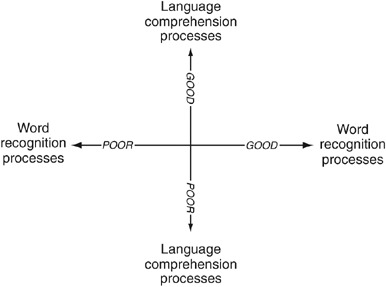
Something Joanna referenced during our conversation was The Simple View of Reading (Gough & Tunmer, 1986) which explains reading as the interaction between two key components:
Both elements are essential. A student who can decode well but struggles with comprehension will not be a successful reader, nor will a student who understands language well but struggles to decode words. This model helps us recognise that reading difficulties can stem from different sources and require different types of support.
Essential information for every teacher to understand in order to understand their students' and their possible challenges with reading.
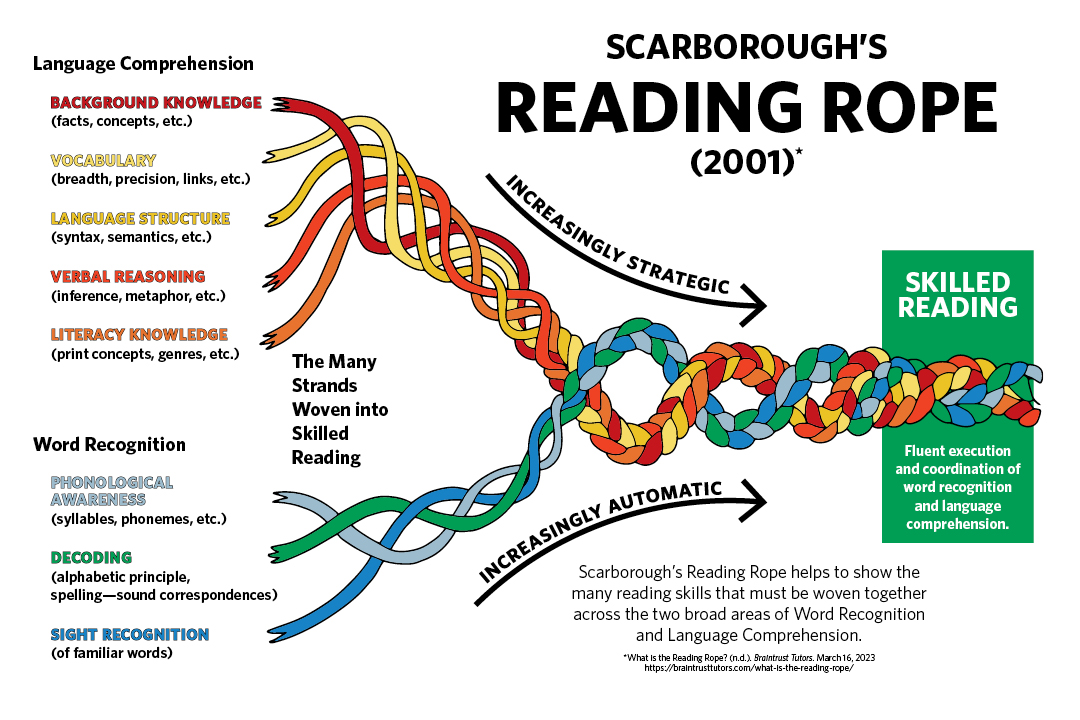
Joanna also referenced Scarborough’s Reading Rope (2001) which expands on the Simple View by illustrating the complexity of skilled reading. Our conversation made me wonder how many practitioners across the different phases and subject specialisms within a school are equipped with this reading methodology in order to enhance the scaffolding that they are able to put in place for struggling readers.
Scarborough's model weaves together two strands:
As these strands become more tightly woven, reading becomes more automatic and strategic. The key takeaway for teachers? Reading isn’t a single skill—it’s a web of interconnected abilities that develop over time. Supporting students in just one strand won’t be enough; we need to help them strengthen multiple aspects of reading through targeted strategies.
But as we know, teachers are stretched: in terms of their timetables, their responsibilities, their headspace, their time. If we want something implemented as part of a whole school approach, we must make this workable within the realities of teacher workload too.
To support teachers to integrate reading strategies in ways that feel natural to their subjects, here are some easy-to-implement techniques:
While a whole-school approach to reading is crucial, it must also be accessible and relevant to all staff, considering the workload and pressures of teaching in 2025 and the diversity of reading skills available to learners across a class. To make this feasible:
A whole-school approach to reading isn't about dressing up for World Book Day or other tokens of book appreciation. While these activities are novel, fun, and help spark an interest in books and reading, they are not the foundation of a strong reading practice and culture within a school - they are the cherry on top of the cake! The real impact comes from what happens in the classroom day to day. Effective whole-school reading strategies are embedded in lessons, assessments, and everyday interactions with text, ensuring that students are consistently supported in developing their reading skills across all subjects.
While individual classroom strategies are important, a coordinated whole-school approach is what truly transforms reading outcomes. Schools can:
Being confident in teaching reading is not just for English teachers; it’s for all of us. By understanding the complexities of reading and integrating simple but effective strategies into our teaching, we empower students to access the curriculum, grow as independent learners, and succeed in every subject. Let’s work together to ensure that reading is embedded across the curriculum—not as an add-on, but as an essential part of great teaching.

